
Harrison County Property Value Types
These three numbers are not interchangeable. West Virginia assesses property at a share of true and actual value for tax purposes. The market value describes what a willing buyer and seller might agree to. The last sale price is narrower still. It records one transaction at one point in time. A Harrison County assessment page can show assessed components, while the deed or the statewide sales search may supply sale clues.
| Value type | What it means | Where to look |
|---|---|---|
| Assessed value | Tax valuation under West Virginia’s assessment rule | Harrison County Assessor / statewide assessment |
| Market value | Estimated amount in an ordinary voluntary sale | Assessment method or independent appraisal |
| Last sale price | Consideration reported for a recorded transfer | Deed and appraisal/sales search, when available |
| Land / building / total | Separate assessment components and total | Assessor result fields |
Read every Harrison County value field with its tax year and parcel number. A total can blend land and improvements. A deed price may reflect a different date. It may even cover a limited interest. The statewide search offers sale dates, price ranges, land and building appraisal filters, and acreage filters, though its result card does not display the same way for every query.
Harrison County Property Value Ratio
West Virginia Code §11-3-1 places the annual assessment date at July 1. The same code sets the assessed base at 60 percent of true and actual value. For most property, true and actual value means the price an ordinary voluntary sale would bring. Farm and income property follow special rules. The 60 percent figure is the assessed base. It is not a buyer discount. It is also not the share of a bill owed as tax.
That July 1 date matters when a sale closes later in the year. The assessment may still rest on the older valuation date. Even so, the deed records a newer transaction. An owner of record can weigh the county appraisal against a sale price. The two values will rarely match. Questions about a tax bill, exemption, or appeal go through the separate Harrison County property tax records process.
The Assessor's contacts page lists real-estate assessment at 304-423-7277 and the main office at 304-624-8510. Confirm which year and which field any figure represents before comparing values across tax periods.
Note: Check the July 1 assessment date against the transaction date before treating two values as equal.
Look Up a Harrison County Parcel Value
Start with the address or parcel in WV Assessment Search. The local Harrison Ownership Search shows no street field. The statewide tool is the direct address route. Select Harrison County, search by street or parcel, and open the matching account. Read the land, building, total appraisal, classification, and sales fields. Compare the situs and mailing address. That check confirms the result belongs to the land in question.
The statewide page includes Basic, Appraisal/Sales, Advanced, and Prior Ownership modes. A query can return a match count. It may also offer a query link, a Property Viewer link, and a CSV export. Filters narrow the field. Sale dates, price ranges, appraisal limits, acreage, property class, and building year or area all help. These controls help find comparable records. Not every account has a complete sale history, though.
- Search the property by street name or parcel in statewide WV assessment.
- Confirm the district, parcel ID, and legal description match the subject land.
- Read the land, building, and total assessment fields with the tax year.
- Check sale date and price filters for a recorded transaction, if returned.
- Use the deed reference to inspect the recorded consideration and terms.
The statewide assessment search goes beyond the local owner form. Sale and appraisal filters are built in. A number still needs context. Pair any result with the tax year and parcel description, and view the filters at the WV Assessment Search.
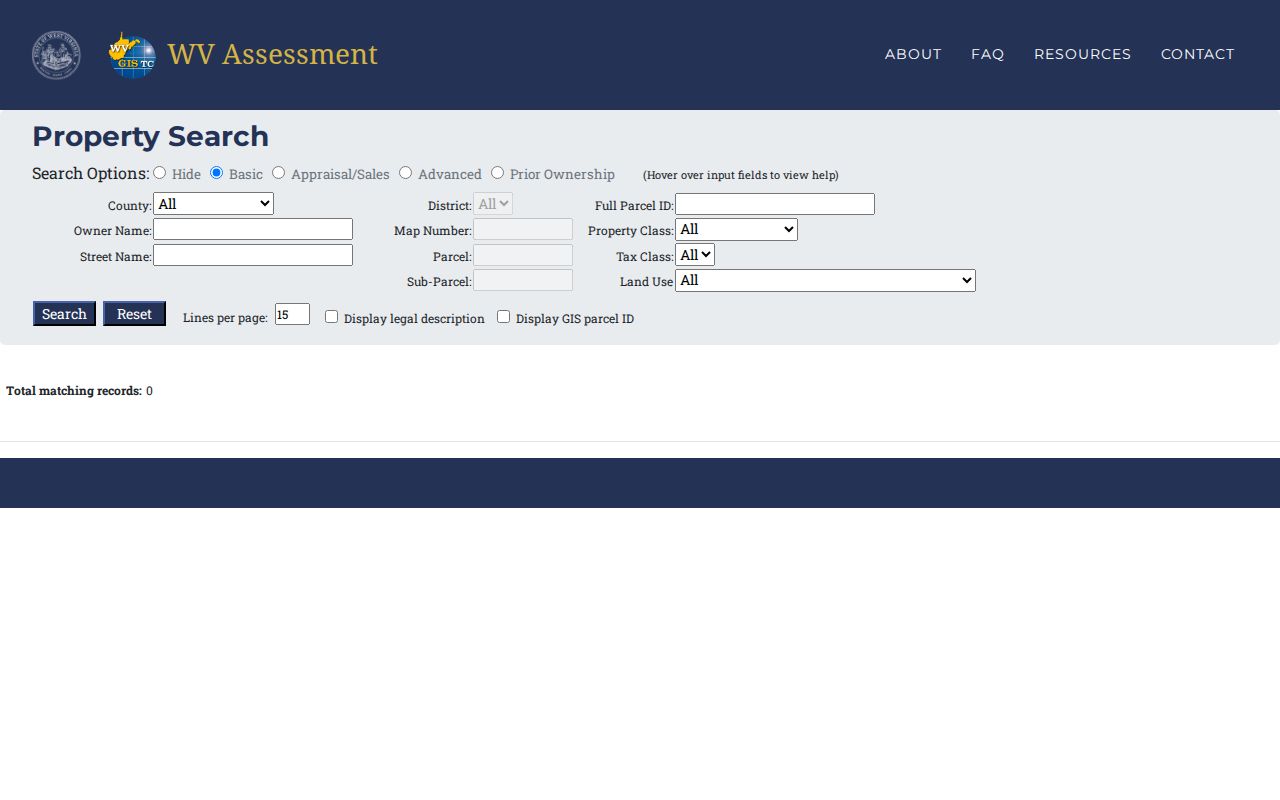
Read any returned sale or appraisal value with the matching parcel and tax year.
Harrison County Property Assessment Fields
Assessment results often split the account into land, building, and total appraisal amounts. The division matters. A change in the structure or the land classification can move one component more than another. A bare total is hard to compare. Note the year, class, acreage, and structure detail too.
The statewide search includes min and max land, building, and total appraisal fields, plus structure year and area ranges. It can also display a legal description or GIS parcel ID. The county GIS and Assessor account help confirm which parcel the numbers belong to. The map line itself is not a value estimate.
Surface and mineral accounts need care. Harrison County's local Assessor form searches mineral accounts separately. Check which interest the value covers. A mineral record and a surface assessment should never be combined into one assumed market figure.
Harrison County Sale Price and Deed Value
A recorded consideration answers to one transfer. It says nothing about later valuations. The newest deed should list the reported price and the parties. It also shows the recording date and the land description. Two tools speed up the search. The statewide assessment search filters by sale date and price. The Clerk index points to the deed book and page. The county offers no stable live parcel sample. So the sale display and its update timing remain unverified.
Read the transaction terms before comparing any deed price with a current assessment. The instrument may carry only minerals. It could convey an easement or a partial interest. Some deeds arise from an estate, a court order, or a tax sale. Those are not ordinary market transactions. The instrument type and legal description matter. They tell you whether the sale is a fair comparison for the whole parcel.
A Clerk Harrison IDX result shows date, document, book and page, and pages. It also lists party role, name, and instrument. That row is a pointer. Pull the document and any related release. Do that before treating a figure as the price paid for the property.
Note: A deed price can involve a partial interest, an estate transfer, or another nonstandard sale context.
Harrison County Property Values on July 1
State law sets the assessment date. Every July 1, the whole tax roll gets one common point. Sales, renovations, and changes in use happen all year anyway. A transaction after July 1 can still serve as a reference. It does not automatically rewrite the roll. Compare like tax years. Check whether the improvement, acreage, or class changed before drawing conclusions.
The county publishes no countywide revaluation schedule or roll-refresh interval. Never infer an update cycle from a single account. The Assessor can explain the current card. The office can also explain what each field means. The state Tax Division supplies the assessment rule. For questions about a figure itself, county assessment contacts are the right stop. The Harrison County Assessor contact page is the source for that office routing.
Contact the Assessor for the roll year behind a figure.
Harrison County Tax Exemptions Change Value
Exemptions change the amount used for taxes. They do not touch the deed's sale price or the parcel's underlying market value. West Virginia describes homestead and other tax-relief programs. Confirm eligibility and filing rules with the Assessor. A homestead flag is a tax status clue. It is not proof of title or occupancy. Keep four entries separate: assessed amount, taxable amount, exemption, and tax bill.
The property value question ends at what each number means. The Sheriff's ticket and the county appeal procedure live on the tax-record path. For a valuation dispute, the Board of Equalization and Review generally begins February 1, and separate rules apply to classification or taxability. A sale comparison is evidence to weigh, never an automatic correction to the assessment.
Harrison County Property Value Terms
These labels help when a search result holds several numbers. Read the stated field instead of assuming each one is "the property value."
- Assessed value
- The amount placed on the tax roll under state assessment rules.
- True and actual value
- The value basis described in West Virginia law, commonly tied to an ordinary voluntary sale.
- Sale price
- The consideration reported for a specific recorded transaction.
- Assessment ratio
- The share of true and actual value used for assessment; state law sets it at 60 percent.
- Reassessment date
- The valuation date used for the annual roll, July 1 in West Virginia.
Note: The 60 percent assessment ratio sets the tax base, not the portion of a purchase price you owe.
Limits on Harrison County Property Values
An assessed value is not a buyer's quote. It is not a licensed appraisal. Nor is it a prediction of future price. It can differ from a recent deed for plain reasons. The sale happened at another time. It covered a different interest, or came from an unusual transaction. A tax classification or exemption can also shift the figure. Use the number for its own question.
For financing, a sale, or an estate distribution, ask a licensed appraiser or qualified professional. The valuation must suit that purpose. The Assessor maintains a tax roll, not a market appraisal service. A nearby parcel works as a comparison only after its details are checked. Its land, building, acreage, date, class, and exemption all matter.
Assessment is not sale value. Harrison County’s assessed amount is used for taxation under the state ratio. It does not tell what the property will sell for today.