
Find Who Owns a Harrison County Property
The ownership path is a short chain of steps. Take the address or parcel number first. The assessor account then names the owner of record. Next, pull the latest deed from the County Clerk index and compare the legal description against the assessment record. If the deed names a business entity rather than a person, the state business registry shows the exact registered name. Working in this order keeps an address match from turning into a mistaken conclusion about a similarly named owner or a neighboring tract.
- Locate the parcel in the assessment search or county GIS and save its district-map-parcel-suffix key.
- Read the owner name and mailing address tied to that tax account.
- Search the latest deed with the owner as grantee and confirm the property description.
- If an LLC or corporation appears, check its name and agent in the WV Secretary of State database.
- Use the Clerk or Assessor counter when the online result is missing or a recent transfer is in question.
The current owner record page covers the assessor name as it stands today. This method is the bridge from an address to proof. Treat an assessor name as a lead. Only the deed and its legal description can show whether the same parcel and the same interest are involved.
Where Harrison County Owner Names Appear
Owner names surface in several systems. Assessment, recording, tax collection, and mapping each do different jobs. The Assessor's Ownership Search is the fastest local spot. It works for an owner string or parcel number. The Clerk index lists recorded deed parties and the instrument type. GIS maps the parcel. The Sheriff handles tax collection. Compare these sources rather than treating one owner-name field as a complete ownership report.
| Source | What the name means | How to confirm |
|---|---|---|
| Assessor roll | Name attached to the tax account | Match parcel, mailing address, and assessment year |
| County Clerk deed index | Grantor or grantee on a recorded instrument | Read the deed image and legal description |
| GIS parcel viewer | Location and tax-map account | Carry the parcel ID to the Assessor and Clerk |
| WV SOS entity search | Business entity details for a named LLC or corporation | Check exact legal name and registered-agent record |
The county Assessor Ownership Search takes owner names and parcel components. It does not accept a street address. For that route, use statewide assessment or the GIS map instead. The local account search is what anchors an owner name to a specific parcel. Open the Harrison County Assessor Ownership Search. The official page displays the owner and parcel fields.
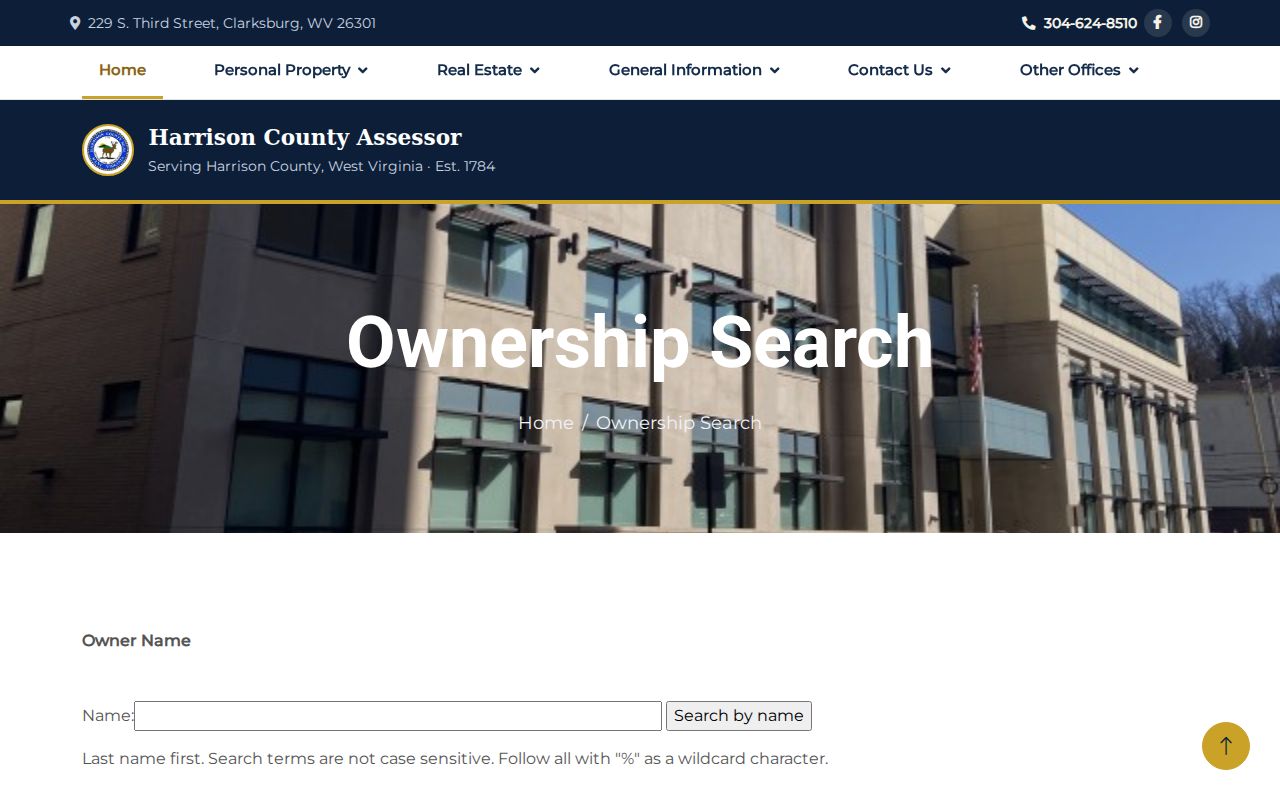
Take the parcel key from that result. Compare the owner field against the recorded deed. The county Clerk page links the land-record index and the fee schedule. The office sits at 229 S. Third Street, Clarksburg, WV 26301, phone 304-624-8674, open weekdays from 8 a.m. to 4 p.m. If ownership identity matters for a transaction, ask the staff. They can explain the image request and certified-copy process. Note: Start with the parcel key. A legal description helps separate two similar names in Harrison County records.
Match Harrison County Names to Deeds
The County Clerk's Land Records Inquiry is the starting point. It lets a searcher pick an index family, a role, and a document type. Search the current owner as grantee to find the acquisition deed. That instrument may list a prior owner as grantor. It may also show a book and page, a date, and the legal description. Common names demand extra care. Compare the district, parcel, mailing address, and tract description. Do this before trusting an index row as the right record. A search result row is not the deed itself. The Harrison portal sorts records into several categories. These include deed, court-order deed, deed of trust, assignment, release, estate, tax, and transfer-on-death. Some of those affect a security interest or a limited right rather than surface ownership. The deed image holds the signature, vesting terms, and legal description. The portal publishes no stated image cutoff or fee list on its face. Confirm both with the Clerk. A recent sale can make the latest recorded deed more current than the assessor name. Harrison publishes no fixed roll refresh schedule. When the two disagree, note the deed recording date. Then ask the Assessor which assessment year is live. The older field is not proof of a hidden transfer.
Harrison County Property Address Clues
The owner's mailing address is not always the site address. Situs means the physical location of the land or structure. The mailing address is simply where county notices go. A parcel can carry an owner in another town. It may list a post-office box, or an address that differs from the structure's street label. The statewide WV Property Viewer shows the physical address first. It then gives the separate mailing address once a parcel is selected. Treat the mailing address as a record field only. It is not proof of residence. Use it solely for a legitimate property matter, exactly as the record provides it. Respect any safety or confidentiality protections that apply. West Virginia's Safe at Home address-confidentiality program runs through the Attorney General. Check that office for eligibility and substitute-address rules.
- Owner of record
- The name associated with an official account or recorded instrument.
- Grantee
- The named recipient of an interest in a deed or other instrument.
- Situs address
- The physical place of a parcel or building.
- Mailing address
- The route used for assessment or tax notices.
Harrison County Property Entities: LLCs and Trusts
The name on a Harrison County tax account is not always a person. It may be an LLC, a trust, an estate, or a fiduciary. That name can differ from whoever signed an older deed. Search the exact name first. Include the punctuation and the entity type. Then check the deed roles and the legal description. An estate can convey land. Harrison IDX lists estate, will, executor, administrator, and court-order deed types. These can stitch the chain together.
The free WV Secretary of State business search returns plenty. You get the matched entity name, type, city, status, and address. It also shows the creation date, registered number, and agent. An agent address is not the beneficial owner. A certificate of existence costs $10. The basic name search is free. The state organization lookup comes from the free WV Secretary of State business search.
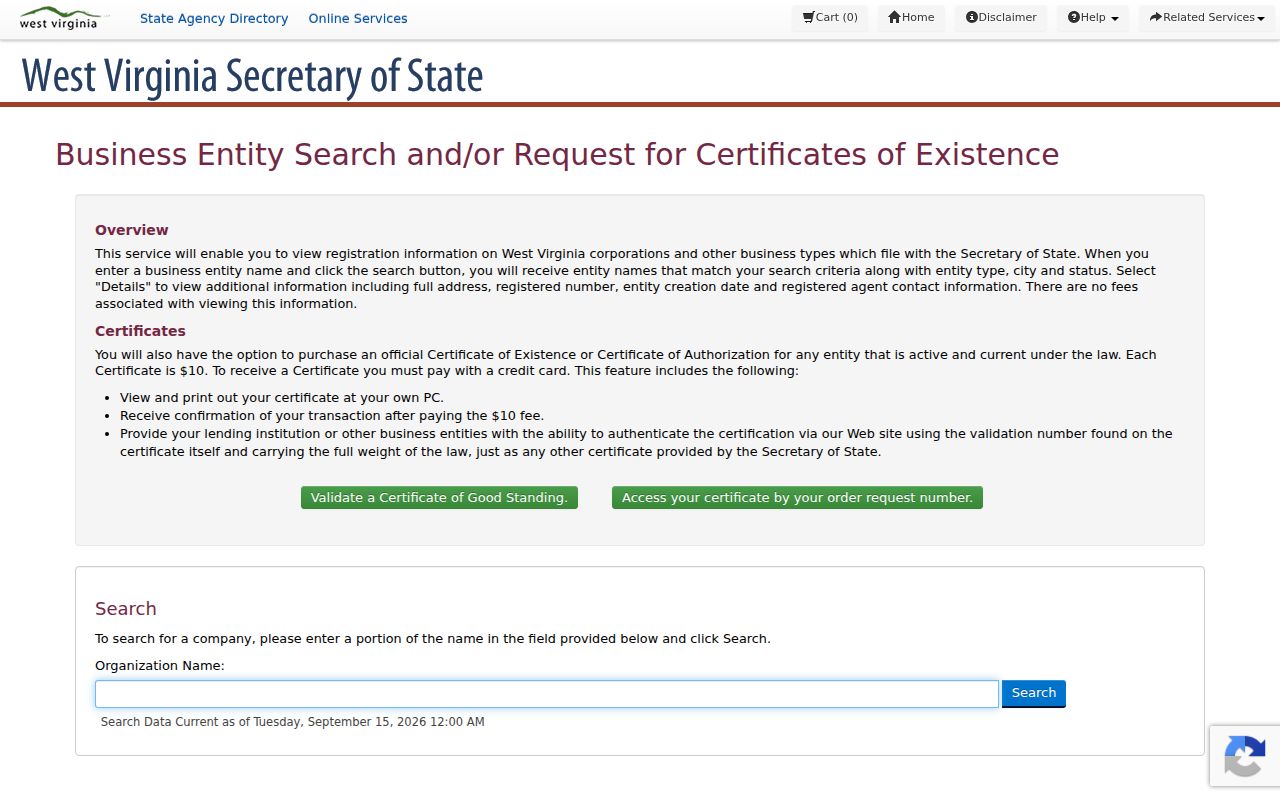
Entity details can clarify a name. A trust may name only its trustee. Beneficiaries often stay unnamed. A corporate filing cannot rewrite a deed. The recorded deed still controls the interest conveyed to the company. Use the Secretary of State search to understand the business record, then read the Clerk instrument to see what was conveyed to it.
Note: A registered agent is a contact on a business filing, not automatic proof of who benefits from the property.
Harrison County Surface and Mineral Owners
Harrison County's assessor form keeps surface and mineral lookups separate. The surface parcel uses district, map, parcel, and suffix fields. Mineral accounts use a different district and map/parcel entry, plus a separate owner-name pair. So a surface search can miss the mineral account. For oil, gas, and minerals, the Assessor lists 304-624-8523.
The Clerk index may show mineral deeds, leases, oil-and-gas releases, easements, or rights-of-way. These records can cover only part of a property interest. Read the terms and land description. That mineral name may not be the current surface owner. Match the parcel ID to the legal description. That connects the right account to the right recording.
Harrison County Owner Names May Lag
The assessment roll and the deed index update on different schedules. A closing can happen before the deed is indexed. It can also happen before an assessor card refreshes. Harrison County publishes no fixed transfer-lag or roll-update calendar. So assume no standard number of days. Compare the latest deed date with the tax year on the Assessor's card. Ask the office which entry is current.
Other gaps come from name changes, spelling, estate administration, trust vesting, or a transfer of less than the full parcel. A result can also point to a nearby property on the same street. Use the parcel key, legal description, instrument, and recorded date as a group.
Owner name is not title proof. An assessor field is a tax-account clue. Confirm an ownership question against the recorded deed and, when needed, a title professional’s review.
Limits on a Harrison County Owner Lookup
A public owner lookup has firm limits. It does not show every financial interest. It does not establish who occupies a building. Voter records, court records, business records, tax accounts, and deeds each carry their own access and privacy rules. West Virginia voter lists are restricted to noncommercial uses. They exclude phone, email, Social Security, driver-license, and state ID numbers.
Use property records for ownership checks, purchase diligence, estate research, civic work, and other lawful purposes. Never use an owner's name or address to stalk, harass, threaten, or harm anyone. If a record is restricted, or a person uses an address-confidentiality program, contact the custodian. Do not try to infer a protected location.
For a definitive transaction review, have a title company or attorney examine the chain and encumbrances. The county index helps you find the source document. It does not issue a title opinion.
Note: Use an owner name for lawful property research and stop when a record's privacy limits apply.